


Article content
A Bloomberg News report out of the U.S. this week tells a story that will be familiar to Canadians who’ve dealt with the many recalls of vehicles due to glitching backup cameras.

THIS CONTENT IS RESERVED FOR SUBSCRIBERS
Enjoy the latest local, national and international news.
- Exclusive articles by Conrad Black, Barbara Kay and others. Plus, special edition NP Platformed and First Reading newsletters and virtual events.
- Unlimited online access to National Post.
- National Post ePaper, an electronic replica of the print edition to view on any device, share and comment on.
- Daily puzzles including the New York Times Crossword.
- Support local journalism.
SUBSCRIBE FOR MORE ARTICLES
Enjoy the latest local, national and international news.
- Exclusive articles by Conrad Black, Barbara Kay and others. Plus, special edition NP Platformed and First Reading newsletters and virtual events.
- Unlimited online access to National Post.
- National Post ePaper, an electronic replica of the print edition to view on any device, share and comment on.
- Daily puzzles including the New York Times Crossword.
- Support local journalism.
REGISTER / SIGN IN TO UNLOCK MORE ARTICLES
Create an account or sign in to continue with your reading experience.
- Access articles from across Canada with one account.
- Share your thoughts and join the conversation in the comments.
- Enjoy additional articles per month.
- Get email updates from your favourite authors.
THIS ARTICLE IS FREE TO READ REGISTER TO UNLOCK.
Create an account or sign in to continue with your reading experience.
- Access articles from across Canada with one account
- Share your thoughts and join the conversation in the comments
- Enjoy additional articles per month
- Get email updates from your favourite authors
Sign In or Create an Account
or
Article content
Article content
Article content
Bloomberg said U.S. automakers have recalled approximately 21 million vehicles due to glitching backup cameras during the eight years they have been mandatory in the U.S., including close to six million just last year. Such recalls have been similarly frequent in Canada.
Article content
Article content
Article content
Here’s what we know about the trouble with backup camera systems, one of the most fault-prone elements of modern vehicles:
Article content
By signing up you consent to receive the above newsletter from Postmedia Network Inc.
Article content
How have backup camera systems performed in Canada?
Like in the U.S., there are myriad media reports about vehicle recalls in Canada over faulty backup cameras. Here are a range of recalls reported in just the last few years.
In late July, more than 17,000 Volkswagen vehicles were recalled, requiring the owners to take them back to a dealership. Transport Canada officials said that “(u)nder certain conditions, a software problem could cause the rearview camera image not to display when the transmission is shifted into reverse.” As a result, it “could reduce a driver’s ability to see behind the vehicle while backing up. This could increase the risk of a crash.”
In early July, Honda Canada recalled 32,289 Odyssey minivans due to an issue with the rearview-camera-image display.
In late May, Honda recalled nearly 1,000 vehicles due to an issue that could affect the rearview cameras.
In April, General Motors recalled more than a quarter of a million Chevrolet Malibus in Canada and the U.S. due to potentially defective rear-view cameras. The number of affected vehicles in Canada numbered 10,098. At the time, the Associated Press reported that a letter from the U.S. National Highway Traffic Safety Administration stated that the rearview camera on certain Malibu vehicles could display distorted or blank images when they were reversed, increasing the risk of a crash.
In late January, Transport Canada issued a recall notice for 12,179 Toyota Tundra trucks from the years 2024 and 2025 due to an issue that could affect the vehicle’s backup camera.
In early January, Transport Canada announced an update regarding an earlier recall involving more than 40,000 Volvo cars and SUVs. Again, the issue cited was a software problem that could cause the rearview camera images not to display when the vehicle was reversed. Even vehicles recalled previously required a new fix.
In late December of 2025, Porsche recalled more than 25,000 vehicles in Canada because of the possibility that the rearview camera image might not appear on the display.
In October 2025, Toyota recalled 32,733 vehicles in Canada due to rearview camera safety concerns, according to Transport Canada.
The month before, on Sept. 9, Ford issued a massive recall. It affected more than 120,000 vehicles in Canada due to potentially faulty rearview cameras. The notice from Transport Canada was part of a broader recall affecting around 1.9 million vehicles worldwide.
In November 2024, Hyundai recalled 48,509 SUVs and small cars in Canada because of a potential issue with the rearview camera imaging not showing up on the driver’s screens.
An even larger recall in June 2024 by automaker Stellantis involved more than one million vehicles, including minivans, SUVs, and pickups, in North America due to a software problem that could affect the display from the rearview camera. Transport Canada listed 126,530 affected vehicles.
Article content

Article content
Article content
How do recalls work in Canada?
Notably, while there have been frequent large-scale recalls due to defective backup camera displays, Transport Canada notices regularly state the issue as the probability of a crash, rather than a link to recorded fatalities. An overhaul concern for safety is paramount. In Canada, the Motor Vehicle Safety Act requires automakers to notify Transport Canada as well as current vehicle owners when they become aware of a regulated defect “in the design, construction or functioning of a vehicle or vehicle equipment,” Sau Sau Liu, senior communications advisor with Transport Canada told National Post in an email. This is especially true for defects “that could affect the safety of a person.”
Liu said recalls are issued by the automakers, not Transport Canada. The latter’s role is ensuring that companies follow the regulatory requirements. However, Transport Canada publishes information about each recall notice in the Motor Vehicle Safety Recalls Database.
An advanced search of “Visual System” recalls in the database, including backup cameras, reveals 847 recalls since 2018. The recalls cover all manner of makes and models. Some of the common reasons listed in rearview camera malfunctioning include: part of the rearview camera image may be blocked, rearview camera image may not display and rearview camera may not work.
Not all these recalls are for the backup camera systems. Visual system recalls also cover other visibility issues, such as rearview mirror and windshield wiper malfunctions. To find the recall specific to your vehicle, fill in the make, model and year. An owner can also enter their vehicle identification number (VIN) in the vehicle manufacturer’s recall lookup tool.
Liu recommends that vehicle owners ensure their vehicle and contact information are registered with the manufacturer to receive prompt recall notifications. This also applies to owners buying and registering a second-hand vehicle. Manufacturer contact information can be found on Transport Canada’s website.
Finally, says Liu, when a vehicle owner believes there is a safety issue with their vehicle or safety recall repair, they are encouraged to report it to Transport Canada’s defect complaints and recalls hotline at 1-800-333-0510 or submit a defect complaint form.
When did regulations change to mandate rear backup cameras?
A 2008 U.S. law, signed by former U.S. President George W. Bush, directed regulators to help prevent pedestrian deaths and injuries caused by backup collisions — particularly among children. That led to mandatory installation of backup cameras in all vehicles beginning in 2018. They were previously an optional feature.
In 2018, Canadian standards were shifted to fall in line with the U.S. The cameras are required in Canada by regulation in passenger cars, SUVs, light pickup trucks and minivans in Canada.
How do rear backup cameras work?
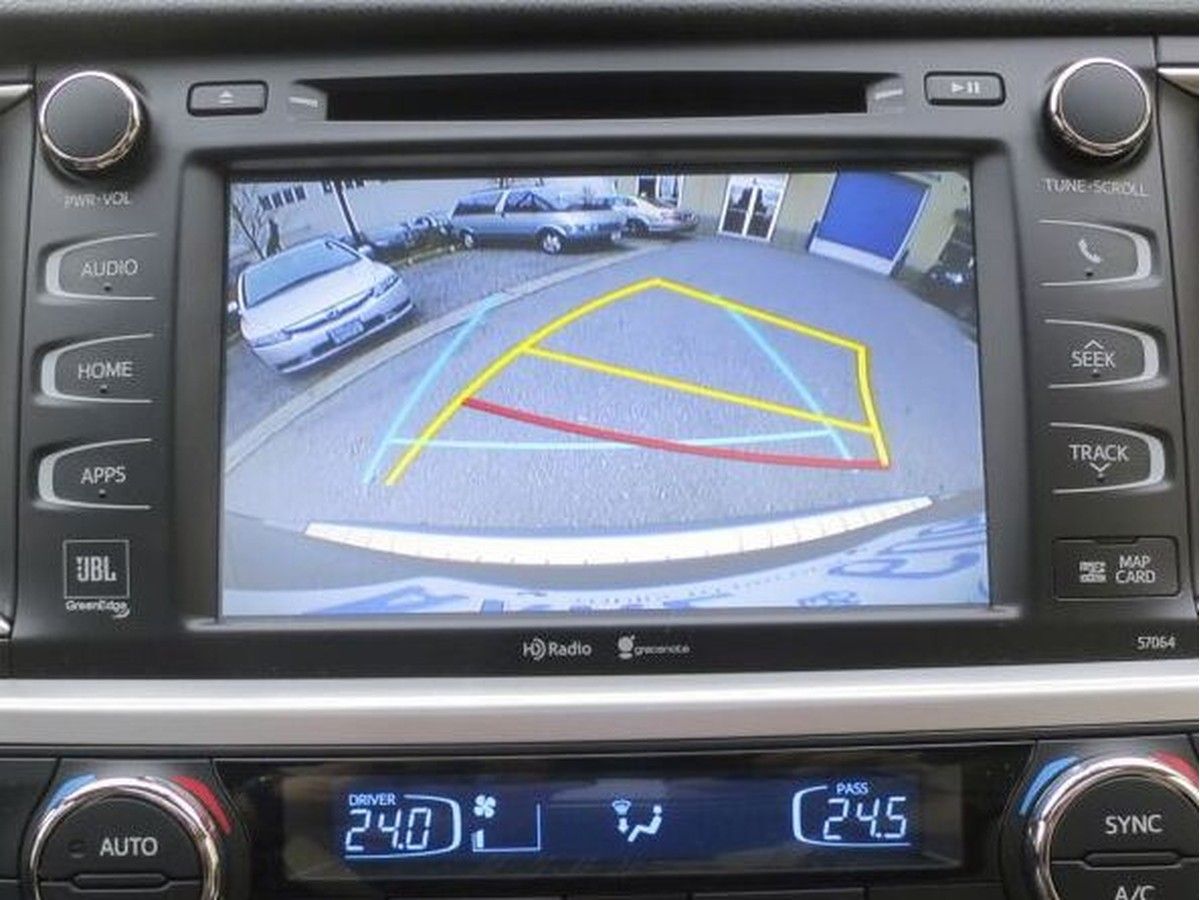
Transport Canada describes backup cameras as displaying “the area directly behind a vehicle when it is in reverse,” geared to preventing the driver from backing into something. They show the area monitored by the camera on a dashboard screen in front of the driver.
Article content


