


Our series on the musical influences behind the long-running manga continues…and spoiler alert!

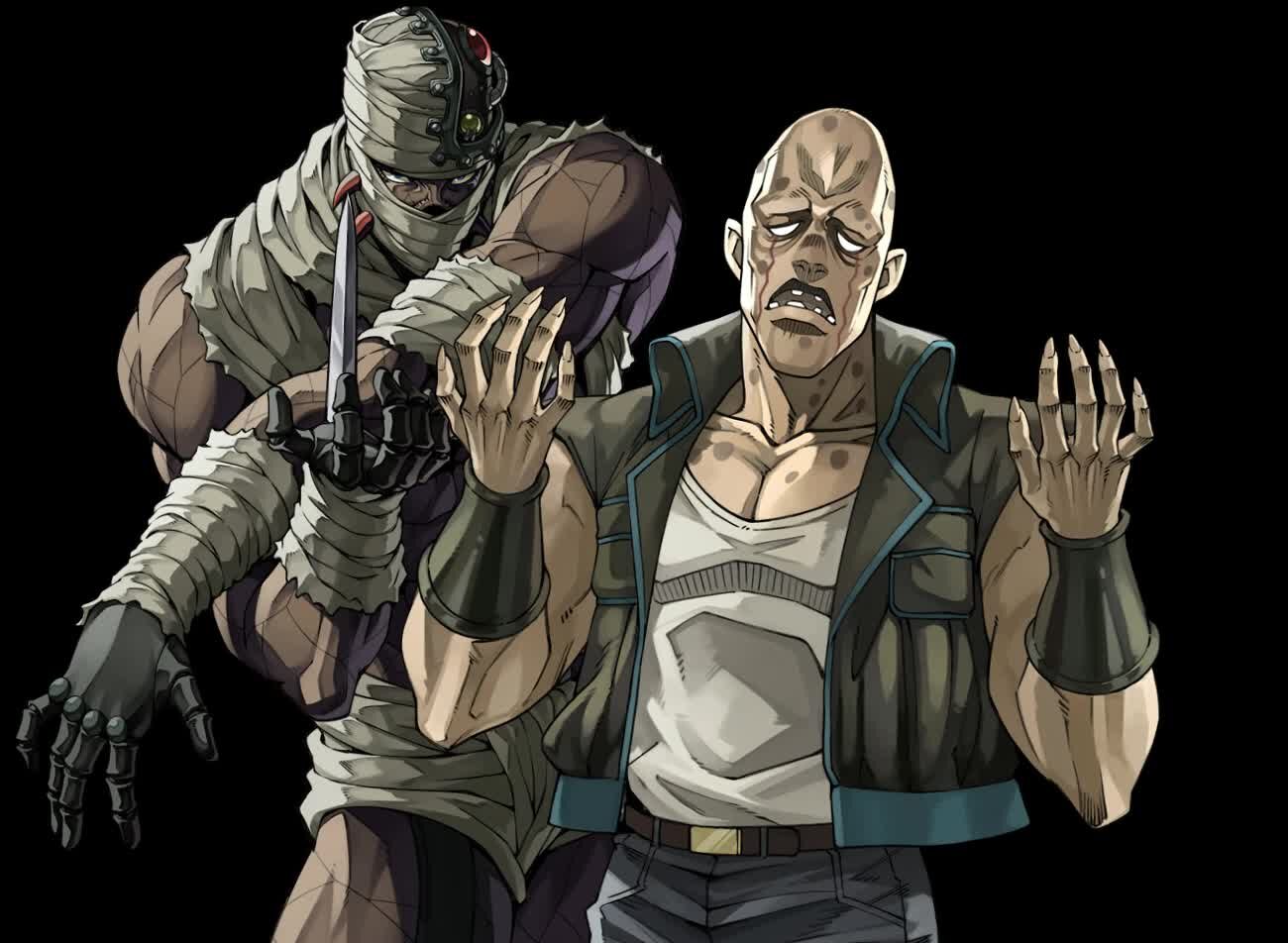
J. Geil with his Stand, The Hanged Man.
Picking up where we left off in Part 3 of JoJo’s Bizarre Adventure: Stardust Crusaders, our next musical reference is perhaps the most despicable villain in DIO’s roster, J. Geil. Recruited along with his mother Enya the Hag, he is one of the many assassins sent by DIO to stop the Joestar group. Ambushing them in Calcutta, he shares his name with the American blues rock band, The J. Geils Band.
Featuring John Geils on jazz trumpet before he switched to blues guitar, Danny Klein on bass and Richard Salwitz on the harmonica, The J. Geils Band originally started as an acoustic blues trio called Snoopy and the Sopwith Camels somewhere in the halls of Worcester Polytechnic Institute, Massachusetts. When they moved to Boston, they were joined by Peter Wolf (lead vocals), Stephen Jo Bladd (drums) and Seth Justman (keyboards), becoming the J. Geils Blues Band before dropping the Blues. Heavily influenced by R&B and blues-rock, the J. Geils Band were best experienced live. The sound, the energy and heavy groove that accompanied their performance somehow never translated to studio recordings.
My blood runs cold
Yeah, my memory has just been sold
My angel is the centerfold (Angel is the centerfold)
“Centerfold” was the song that really propelled the band to stardom. Released in September 1981, this single topped the US Billboard Hot 100 chart for six consecutive weeks in February 1982. It was the band’s foray into new wave, a departure from their usual blues rock style and also the biggest hit they had. Written by Justman, who had co-written all the songs on their 10th album Freeze Frame (1981), the song details the story of a man who discovers his erstwhile homeroom crush in the centerfold of a magazine years later. “Centerfold” veered towards pop-rock with a slight blues twist and a catchy post chorus featuring a lot more synth. It heralded the shift of their musical signature away from their bluesy roots. Despite the commercial success of this sound, it was the beginning of the rift, with the rest band heading towards new wave and Wolf wanting to get back to blues.
The J. Geil of Stardust Crusaders was a bad egg even before getting on the vampire DIO’s payroll. Responsible for the death and assault countless young women, including the Joestar’s group’s Jean Paul Polnareff’s younger sister, J. Geil believed his victims loved and admired him.
Aw, order in the court
Thank you, thank you
I want no shenanigans in my courtroom
Please bring on the first case
Acquitted from trial because no one believed the witness testimony that the perpetrator had two right hands, J. Geil gets away scot-free and Polnareff makes it his mission to bring his sister’s murderer to justice.
Rip them wires right off your phone
Got to make sure we’re all alone
“Back to Get Ya,” track three on the Bloodshot (1973) album featured a meaner, more powerful sound than their two previous studio albums. Channeling the momentum from their live album Full House (1972), the band had got the edge they needed from performing live shows in a true bar band manner to capture that energy in a studio performance. It contributed to making Bloodshot it to Number 10 on the Billboard 200 charts and the first breakthrough album in their discography.
J. Geil’s appearance was monstrously hideous, two right hands excluded, so he preferred to operate out of public view and in the shadows. He takes up Hol Horse’s offer of a temporary partnership. Spotting Polnareff among the Joestar group, J. Geil decides to taunt him by making an appearance, thereby baiting the former to pursue him alone.
They’ll hit you with no warning
They’ll gather by your plate
Holdin’ all the cards
They’re dealin’ out your fate
J. Geil’s Stand is based on the Tarot card of The Hanged Man. Wrapped in bandages like a mummy, with two blades in its two right hands, this Stand attacks the target’s reflection, making it virtually undetectable. It manifests itself in reflective surfaces, jumping to the next viable location that’s directly in front of it at light speed. The only time it leaves itself vulnerable for attacks is when it’s moving from one surface to the next.
Just look me in the eye
And tell me
If you pass me by baby, tell me
You gotta look me in the eye and tell me
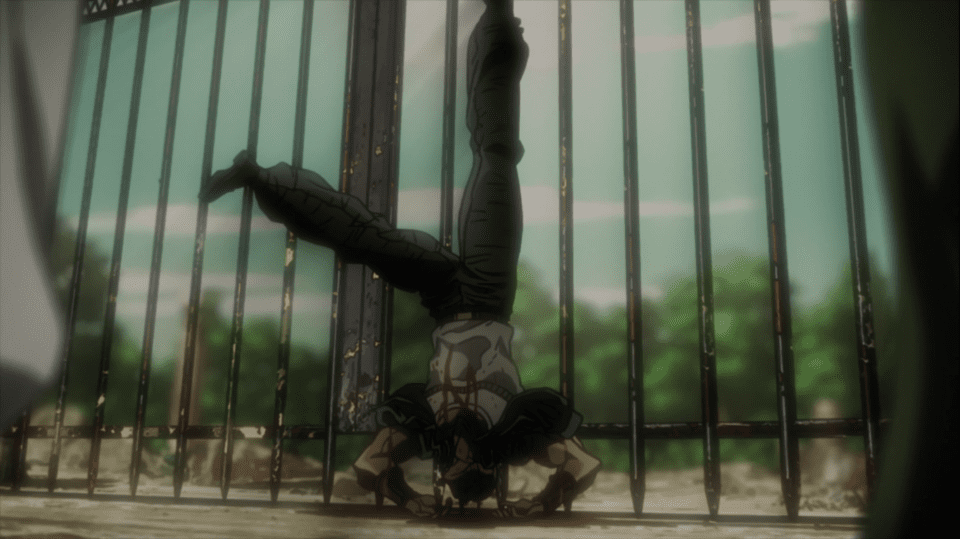
Saved by his friend Kakyoin, Polnareff figures out the way The Hanged Man works. J. Geil meanwhile lures the two of them into a crowd of people where The Hanged Man hides in the reflection of their eyes. Sensing the danger, Kakyoin diverts the attention of the crowd onto a coin while Polnareff kicks dirt into their eyes. Forced to flee, The Hanged Man starts looking for the next reflective surface when Polnareff’s Stand, the Silver Chariot, attacks. The final blow knocks both Stand and its user so hard that J. Geil goes flying until he lands upside down on a gate, looking very much like the Tarot card his Stand represents.
J. Geil’s Playlist
“Centerfold” (Album: Freeze Frame, 1982)
“Funky Judge” (Album: Nightmares…and Other Tales From the Vinyl Jungle, 1974)
“Back to Get Ya” (Album: Bloodshot, 1973)
“Takin’ You Down” (Album: Love Stinks, 1980)
“Look Me in the Eye” (Album: Nightmares…and Other Tales From the Vinyl Jungle, 1974)