

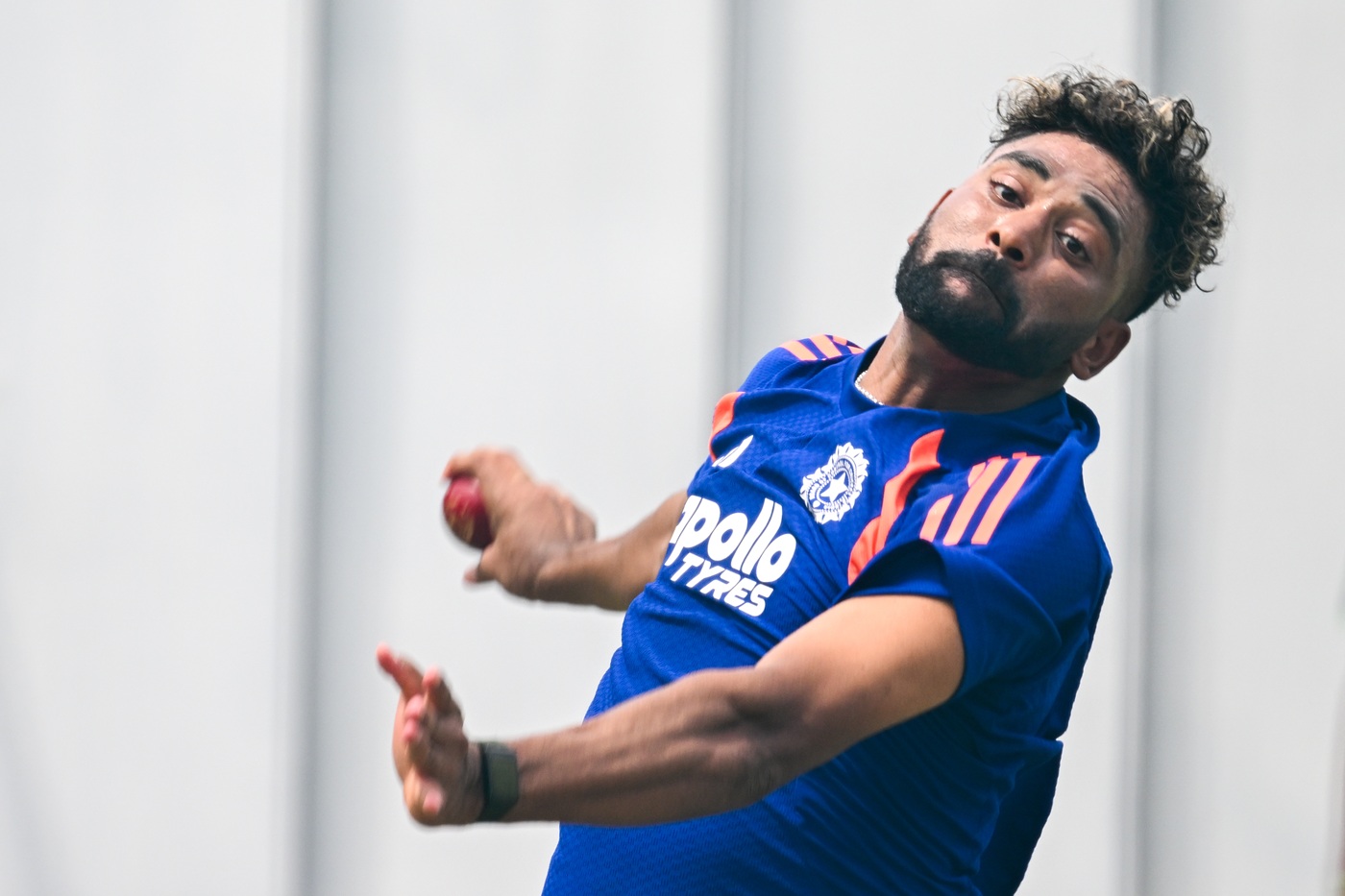

Morne Morkel has high expectations from the fast bowlers – Mohammed Siraj is the most experienced, with Prasidh Krishna and the uncapped Gurnoor Brar and Auqib Nabi around


Mohammed Siraj is the only experienced quick in India’s line-up • Sri Lanka Cricket
Bowl high-energy spells in short bursts. Hit the deck hard. Be prepared for the Kookaburra ball to go soft early. Use the breadth of the crease. And look for reverse swing.
These, essentially, are the fast-bowling maxims India will hope to live by over their two-Test series in Sri Lanka, according to bowling coach Morne Morkel. Although spinners – as usual – are expected to be the primary threats in Sri Lanka, seamers can also deliver match-turning spells, particularly in Galle. Morkel would know. Not only did he claim 12 wickets at an average of 16 in two Tests on the island during his own career, seven of those wickets came in South Africa’s victory in Galle in 2014.
India’s seam attack is unusually inexperienced on this tour. Aside from Mohammed Siraj, India have Prasidh Krishna, Gurnoor Brar and Auqib Nabi on tour. Krishna has seven Tests to his name, while Brar and Nabi are uncapped. Brar at least had tasted success on the island earlier in the year with the India A team.
“Our skill is there, and the planning will be there, but the biggest challenge coming to Sri Lanka is the heat, the humidity, and the Kookaburra ball going soft a little earlier,” Morkel said. “It will go soft after 25 or 30 overs, so we have to expect that. In these conditions, it’s all about your mindset. If you’re a fast bowler, if you’re going to bowl the shortest spells, the energy you put in the ball and putting it into good areas – you’ll always have opportunity. As the Test match will go on, hopefully there will be a little bit of uneven bounce.
“It’s about how we can stack up overs together with intensity and create that pressure. Because we haven’t played a lot of red-ball cricket in the last couple of months, going back into that is going to be a challenge as well.”
Where India use the harder SG ball at home, the Kookaburra – whose seam is reputed to deteriorate more quickly – is used in Sri Lanka. On venues such as Galle, the new ball offers substantially more wicket-taking threat than the old ball. Quicks often perform a holding role on the island, keeping a lid on the scoring while spinners attack from the other end.
“Even in our playing days, I thought if you hit the deck hard here you are asking lots of questions on a good length, you’re always in the chance of picking up results,” Morkel said. “When the ball goes soft, what is our next step? We have to be street smart in terms of how we’re going to use the crease or how we’re going to use our short ball. We need to be able to do some of that quite quickly.”
In Galle, as the sea breeze dries out the square through the course of the match, reverse swing can also feature late in the game. Reverse swing had been crucial to South Africa’s 2014 victory at this venue.
“I think reverse swing can definitely play a role here if teams can get the ball to reverse,” Morkel said. “This morning we had quite a big shower, so that can make the outfield a little softer and the ball does take longer to reverse.”
Andrew Fidel Fernando is a senior writer at Cricinfo. @afidelf

