

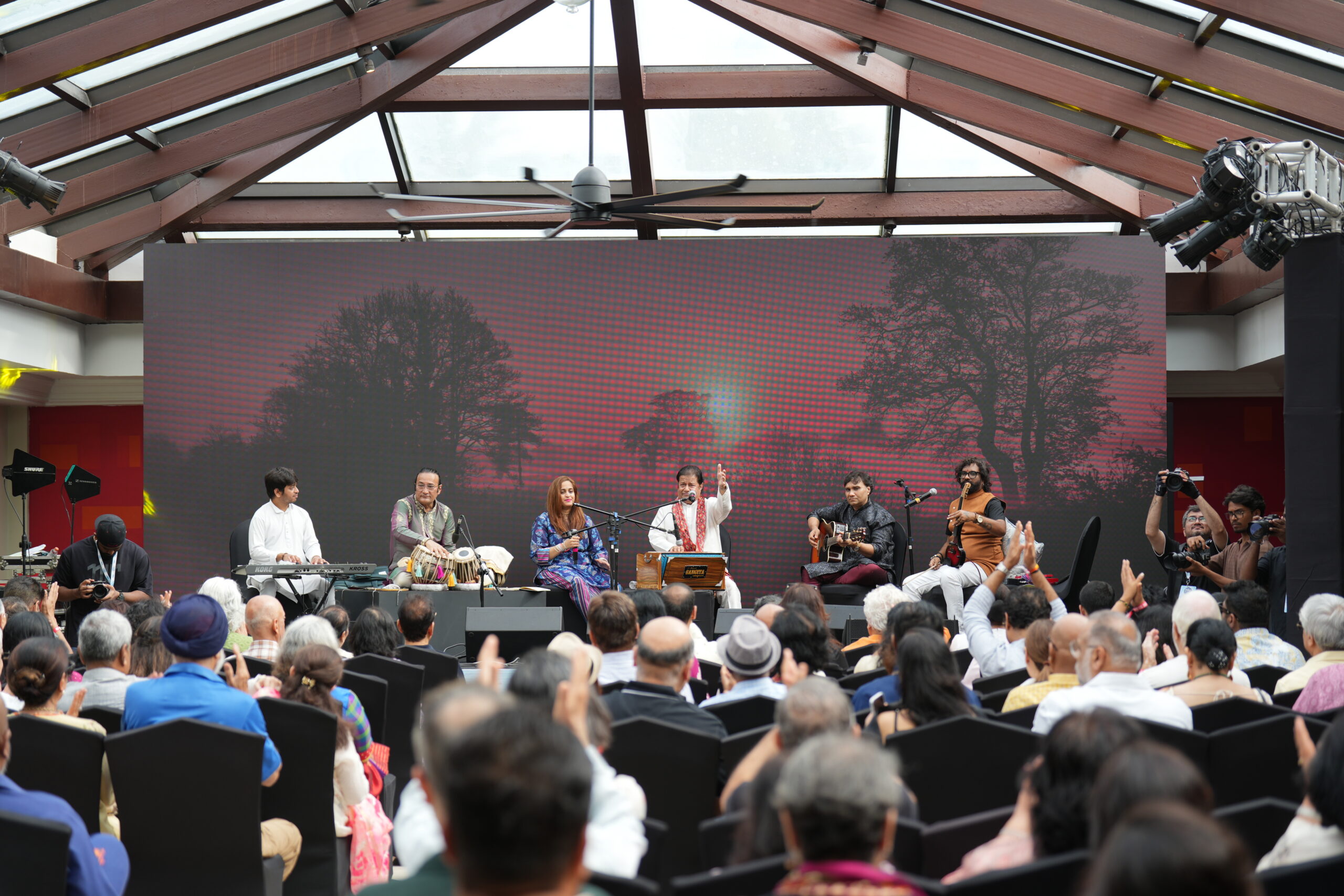

Across a rain-dampened weekend of music and merriment in Goa, the most memorable moments came when the line between artist and audience dissolved
There’s a sense of languid ease that sets in with the first monsoon showers in Goa, and the folks behind Malhar and the Sea know it so well, they’ve curated their entire festival around it.
Now in its third edition, the two-day residential music event has come to be associated with a wide breadth of India’s classical, folk and fusion traditions and become a sort of annual pilgrimage for music aficionados from across the country. Produced by Showhouse Events under founder and managing director Omer Hamid, previous editions have hosted the likes of Kaushiki Chakraborty, Ustad Amjad Ali Khan, Purbayan Chatterjee, Madhubanti Bagchi, Malini Awasthi and Karsh Kale, earning the festival a reputation for high-caliber lineups.
Proclaiming itself a “musication,” each performance at Malhar and the Sea is meant to melt into the next, almost as if in sync with the monsoon’s unpredictable rhythm. Running from July 24 to July 26, 2026, this year’s edition, themed around “One India, Many Voices,” sought to trace the vast spectrum of India’s age-old vocal traditions. From the austerity of dhrupad to the fluidity of thumri, the central thread that tied each performance together was the remarkable capability of the human voice in all its forms and formats.
As we arrived at this year’s venue, Taj Exotica, Goa, after a drive through rain-drizzled neon fields, the pitter-patter of rain on the patio became a percussive backdrop for what lay inside.
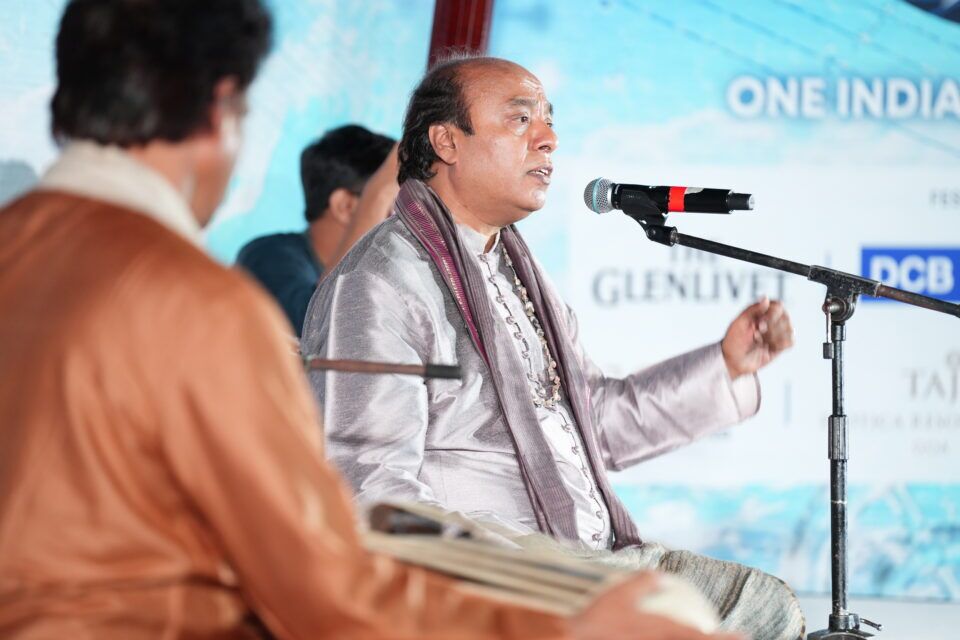
The first day festivities kicked off with Ustad Wasifuddin Dagar, a scion of the storied Dagar lineage, whose roots stretch back to the 16th-century saint Swami Haridas. Widely regarded as the oldest surviving form of Hindustani classical vocal music, dhrupad strips the voice back to its barest essentials, with every sustained note carrying the weight of centuries of discipline. Dagar’s recital embraced that philosophy in full, drawing the audience into a space of stillness, contemplation and, at its most powerful, devotion.
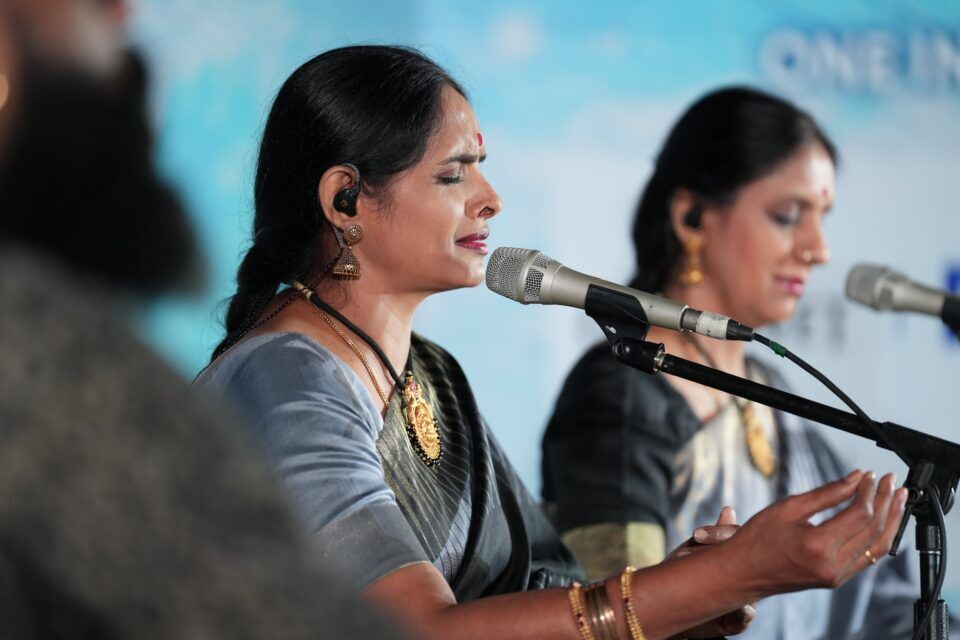
If Dagar’s recital invited introspection, the follow-up act responded with exuberance. Classical vocalists Ranjani and Gayatri, better known as the RaGa Sisters, delivered one of the festival’s most electric performances, rendering Marathi abhangs through the grammar of Carnatic music. Perfectly coordinated, both in their vocal synchronicity and their matching ombré sarees, the sisters brought together two distinct musical traditions with effortless grace, preserving the devotional spirit of the abhang while embracing the rhythmic complexity of Carnatic music. Waves of applause and repeated calls for encores kept them on stage for more than an hour beyond their allotted time, but the thing that struck us most was how easily it slipped into something conversational rather than coaxed. Even when the sisters agreed to indulge the audience with yet another last song, they did so on the condition that everyone would chant “Vitthal” (the deity central to the abhang tradition) along with them.
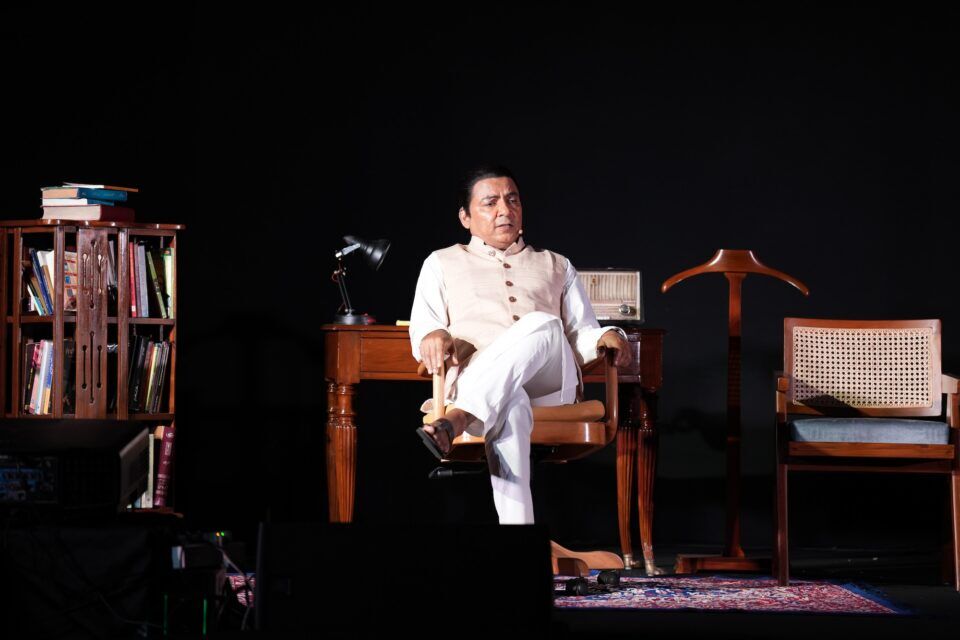
The festival’s exploration of the human voice took a new direction with actor-director Danish Hussain’s Main Pal Do Pal Ka Shayar Hoon, the first time Malhar and the Sea was mounting a musical theater production. Originally staged by Hussain’s Hoshruba Repertory theatre troupe in 2024, the performance piece was an ode to legendary poet and Hindi film lyricist Sahir Ludhianvi, tracing his journey from Abdul Hayee, a young boy from Ludhiana, to the writer whose words shaped generations of listeners.
Mixing and matching live music with storytelling and theater, the narrative moved between two worlds: Ludhianvi’s study, where Hussain inhabited the poet’s personal struggles and triumphs, and a 1970s recording studio, where musicians, singers and technicians pored over his history with rapt attention. The production’s greatest strength was in how it jumped between music and monologue, allowing Ludhianvi’s songs to tell his story as much as the dialogue did. As Hussain’s troupe recreated key moments from Ludhianvi’s life — from his troubled childhood and early acts of defiance against British rule and communalism, to his rise as one of Bollywood’s most influential lyricists — the audience found themselves instinctively joining in for classics like “Jaane Woh Kaise Log The” and “Sar Jo Tera Chakraye.” And in doing so, it reminded us that before a song can find its voice, it must find its words.
Across the weekend, every act seemed to drill down one ethos: that the human voice is our oldest archive. Long before melodies were recorded or poems found their way onto paper, they were carried from one generation to the next by those who sang them. Whether through the enigmatic Sufi-qawwali of Tasawwur Ensemble, led by festival regular Shivam Bhardwaj, or the auspicious morning bhajans of Anup Jalota, Malhar and the Sea repeatedly returned to the voice as an instrument of inheritance.
That philosophy carried through to Hindustani classical vocalist Ronkini Gupta’s recital on Day 2. Known for her command over both classical and semi-classical forms, Gupta’s voice moved with both precision and abandon, at once navigating the elaborate structures of khayal and softening into the expressive storytelling of thumri.
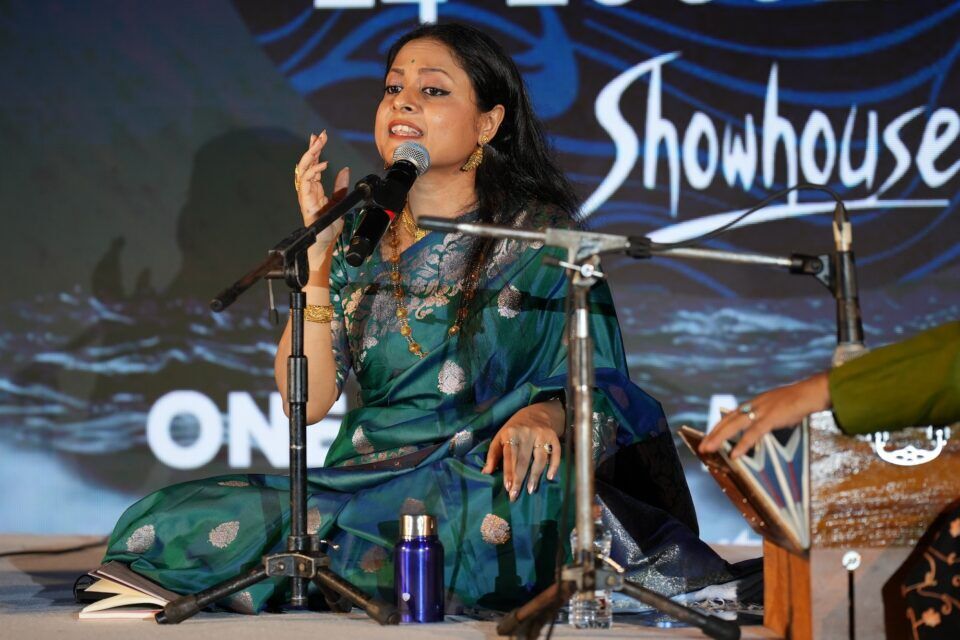
If there was one thing every artist at Malhar and the Sea understood particularly well, it was that the strongest performances rarely remained one-sided. Time and again, the distance between the artist and audience dissolved, leaving enough room for conversation, improvisation and, more often than not, a roomful of people singing along.
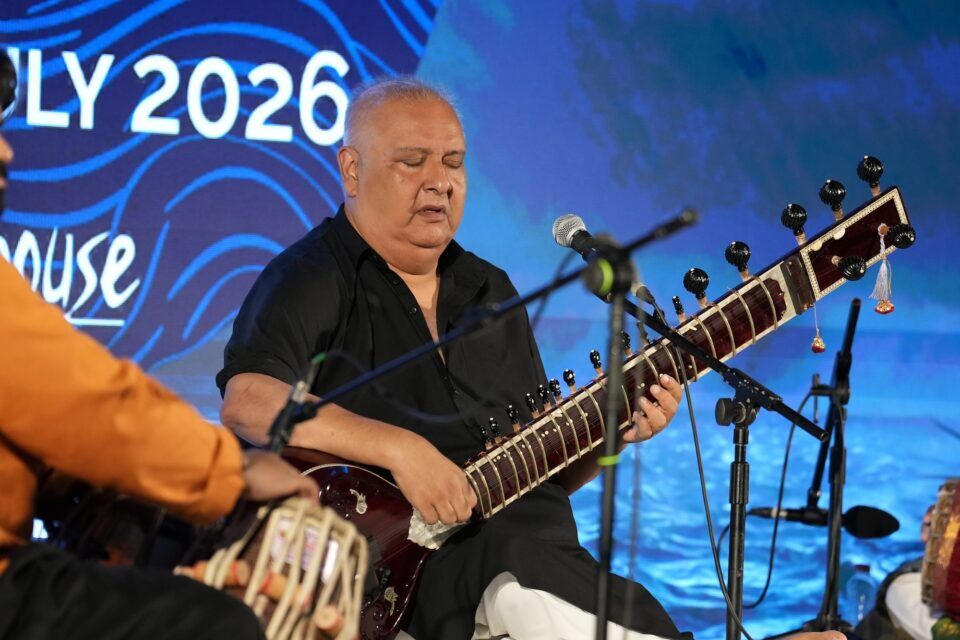
Nobody embodied that spirit more invigoratingly than Ustad Shujaat Khan. A torchbearer of the Imdadkhani gharana and the gayaki ang sitar style pioneered by his father Ustad Vilayat Khan, his voice and sitar moved in tandem, making it difficult to tell where one ended and the other began. But it was his easy rapport with the audience that hit the hardest. Between intricate sitar passages, he slipped into anecdotes and jokes, collapsing the formality that often surrounds Hindustani classical concerts.
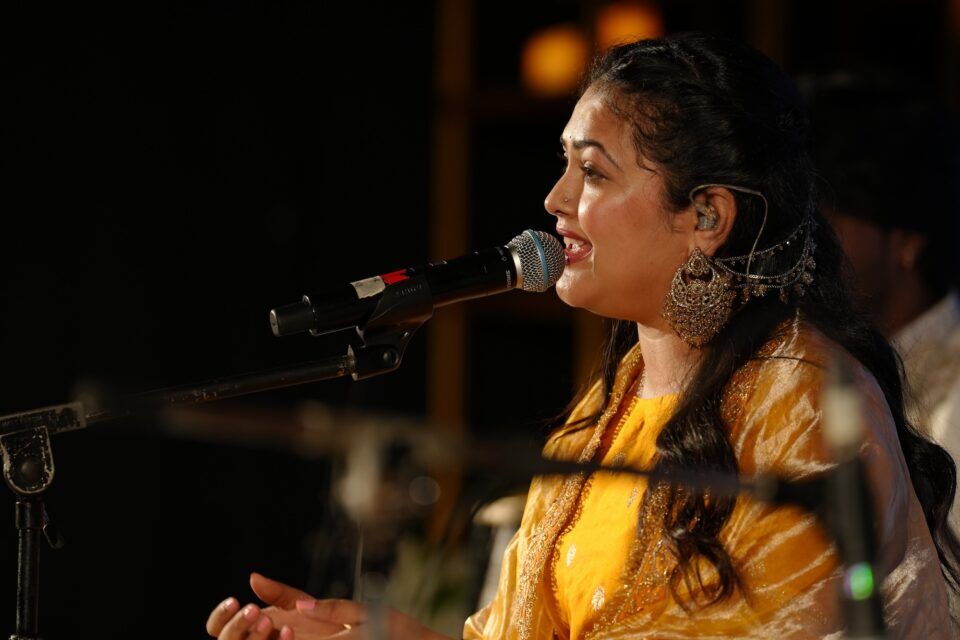
That same ease carried into the performance of Marathi playback singer and musical theater artist Priyanka Barve, whose work across classical music, cinema and the stage has made her one of the most versatile voices in contemporary Hindi and Marathi music. Leaning into a more familiar repertoire, Barve’s renditions of classics like “Hamari Atariya,” “Lag Jaa Gale,” “Aahista,” and a Raga Pahadi medley had the entire room joyfully singing along. But it was the way she treated them as collaborators rather than spectators that felt most true to the festival’s spirit, happily stepping aside whenever they wanted to finish a familiar line, and even pulling up the lyrics on her phone while attempting a crowd request for “Moh Moh Ke Dhaage.”
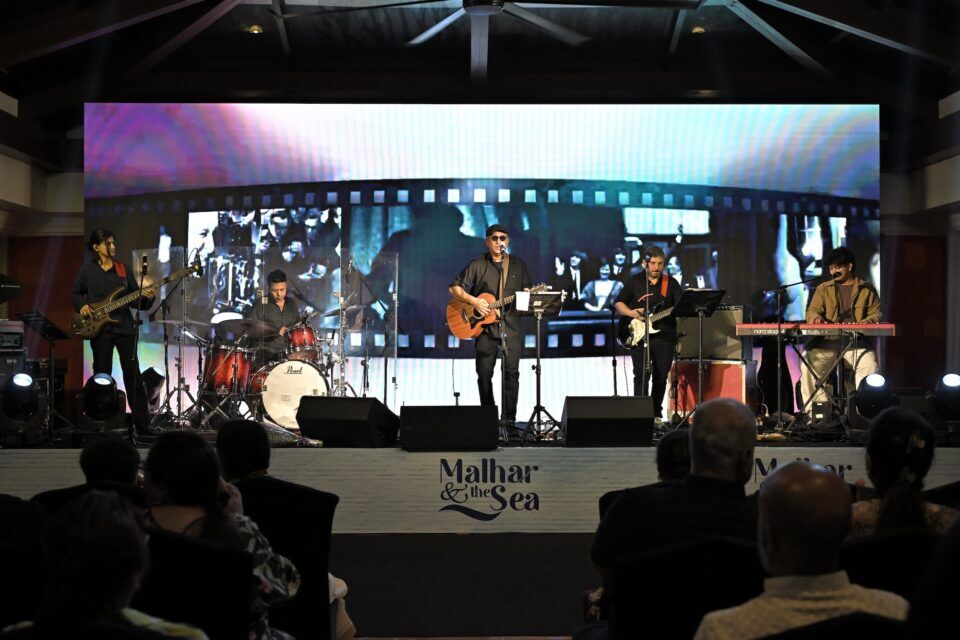
Across two and a half days, even as the instruments and energy shifted from one performance to the next, the feeling at the heart of the festival remained one of complete immersion. Even in its closing moments, a Beatles tribute by Wanted Yesterday, led by Subhash Kamat, had the kurta-clad crowd jiving enthusiastically to the band’s popular hits like “Hey Jude” and “I Want To Hold Your Hand,” while Nadia Rebello’s intimate unplugged Fado performance was a fitting send-off that nodded to the Portuguese influence on Goa’s musical identity.
Malhar and the Sea may not be the country’s most adventurous festival, but what it lacks in experimentation, it makes up for in something far harder to curate: genuine intimacy. By the final morning, the audience no longer felt like a gathering of strangers, but a group of friends passing songs back and forth, each person knowing exactly when to sing and when to simply listen.

