Beyond The Border: The Most Exciting Desi Diaspora Artists Right Now
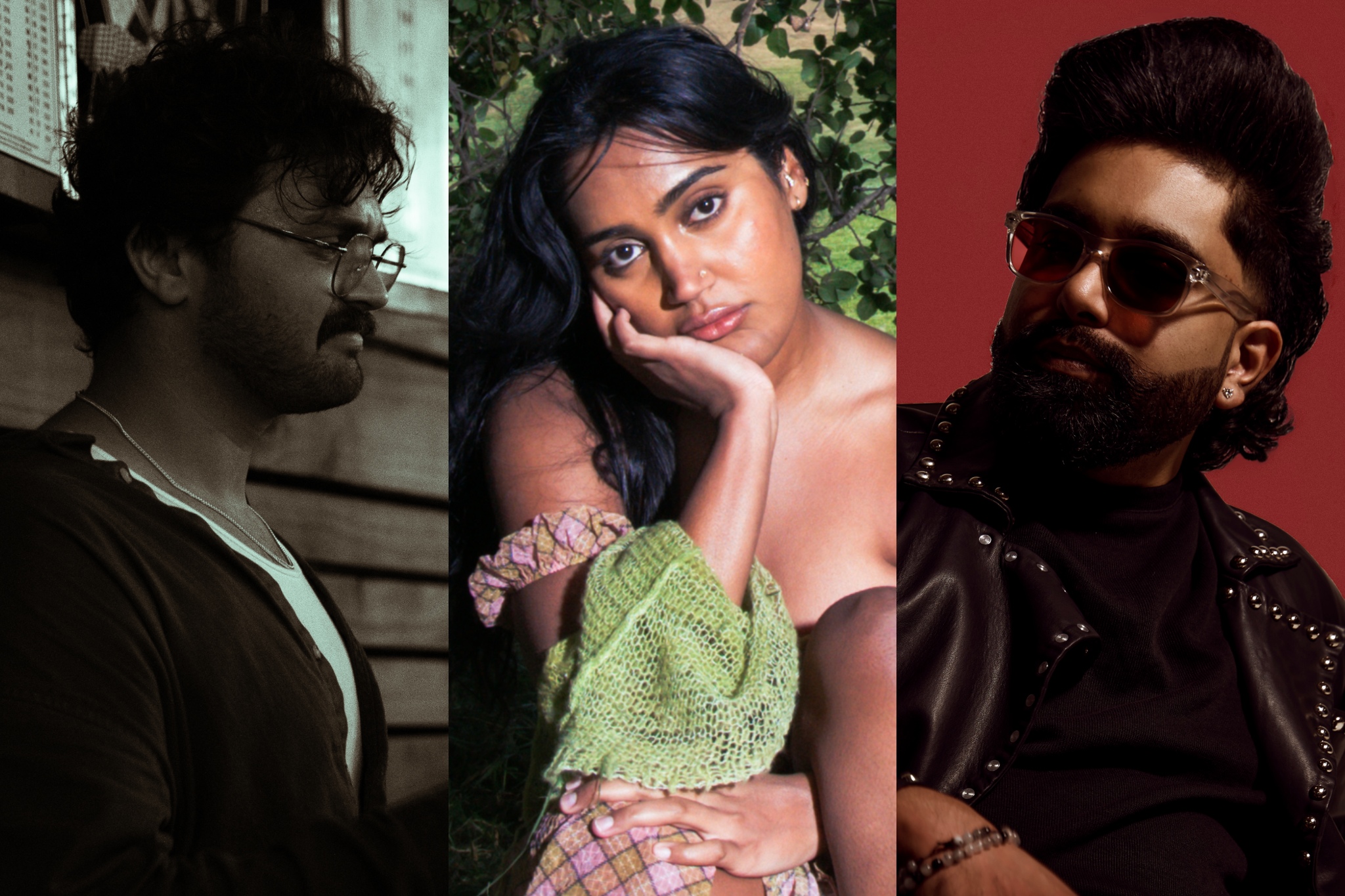
From Dallas-based Vamsi Kalakuntla’s Telugu dancefloor tunes to drummer Abhishek Raj Sinha’s Nashville breakthrough, meet the musicians who are making global moves
For decades, Indian-origin musicians abroad have found ways to carry their heritage into new sonic terrains, from the early wave of second-generation South Asian musicians who built communities through bhangra and classical music, to the artists today moving fluidly between genres and scenes. The desi diaspora has never been musically monolithic, and that diversity is only becoming more pronounced.
In the densely desi-populated city of Dallas, Telugu artist Vamsi Kalakuntla throws some of the biggest parties in the community, bringing classic Telugu music into the mix with genres like reggaeton. In Melbourne, vocalist-composer Neeru, aka Neeharika Shyju, is drawing from Indian classical as well as Celtic traditions for her upcoming album Moonbow. Los Angeles-based artist Akshara has built an audience through film soundtrack work with the likes of A.R. Rahman, but found a whole new level of reach when her song “ORBIT” went viral on TikTok. New Delhi-origin drummer Abhishek Raj Sinha has carved out a place in Nashville’s music scene, while Mumbai-origin producer Cartier K, aka Vivaan Gugnani, has worked with artists including Lil Tecca and Ty Dolla $ign while increasingly turning his attention toward community-led initiatives.
Their music may exist far from India, but their identities don’t stop at its borders. We asked these rising artists about the ways they draw from their Indian heritage, their recent projects, the cultures and music scenes they’ve found themselves embedded in, and the assumptions and experiences that come with being desi artists abroad.
Interviews edited for length and clarity
Abhishek Raj Sinha
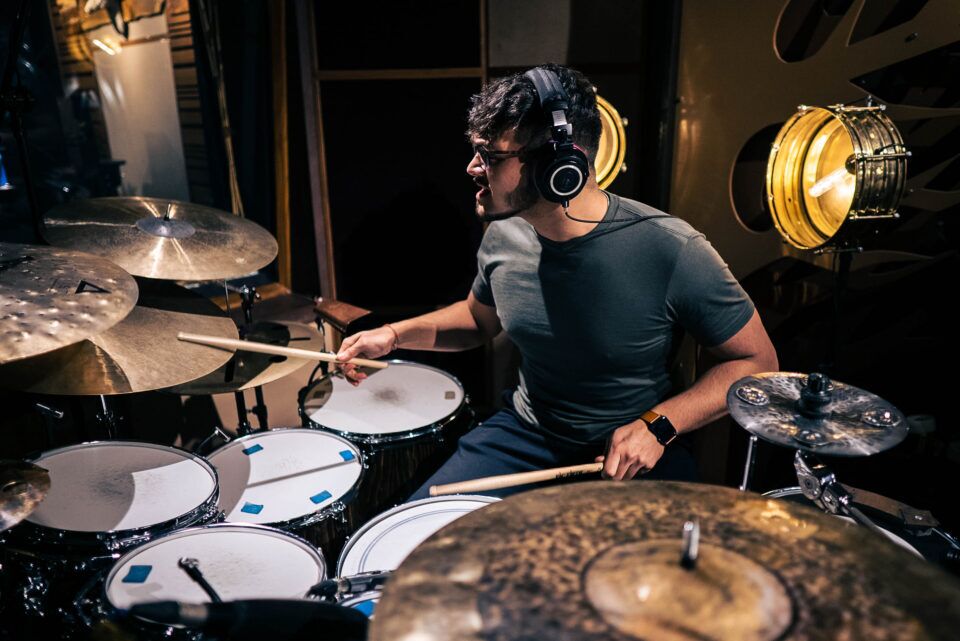
A tabla artist, drummer and audio engineer raised in New Delhi and now based in Nashville, Abhishek Raj Sinha — whose artist moniker is Raj — has made the American music hub his home despite the odds. Part of several bands and working as a session artist, Raj balances roles in the American and Indian music industry.
When did you feel like music could be a legitimate expression of both your Indian roots as well as the more Western sensibilities?
The way that I perceive my Indian roots is somewhat unique. I define being Indian as being someone brought up to always work hard despite the odds. I started learning music when my mother enrolled me in tabla lessons. I was able to pick it up relatively quickly, and a couple of years after that, my sister recommended that I start learning the drums. Once I started, my parents did not succumb to my wishes of owning a drum set right away. They enrolled me in drum lessons, but wanted to make sure that I was serious enough about the instrument before buying me any drums or equipment. I had to practice on pillows and practice pads and prove my passion to them.
Only after witnessing my performance at my music school’s annual concert did they finally decide to buy me a drum set, albeit a used one. In short, I always had to earn my keep when it came to drumming. And that is a big part of the reason that I practiced as hard as I did. This work ethic that my parents ingrained in me is a part of my Indian roots, as well as the tabla lessons that helped me break down more complex rhythms a little easier.
What’s one creative practice that you took from India to the U.S. that you feel helped in your journey?
Again, when learning the tabla, I learnt about the importance of vocalizing rhythms before even attempting to play them. This was taught to me as Bol. This practice is something I use even today, when working out more complicated rhythmic patterns. It helps the mind understand the rhythm and its relationship with the quarter notes before attempting to play it.
What is it like being one of the few Indian artists out in Nashville?
It is isolating. I can count on one hand the number of Indian artists that I have met while part of the scene here in Nashville, and every time both parties are surprised that another Indian person is trying to make music work happen full-time. Luckily for me, though, I have always preferred to go by my middle name Raj, rather than my first name Abhishek, so it makes it easier on me every time I introduce myself to other Americans since they tend to have heard of that name before and don’t have much trouble pronouncing it.
A lot of people always expect me to answer their questions about India, and sometimes I don’t have the proper answers. I am usually pretty happy to answer such questions, but sometimes the person asking them can be ignorant and rude, and in those cases, I choose to refrain from giving them any answers.
One thing that I do love being asked about is Indian classical music, as it is something that I am immensely proud to be associated with, even if it is in a small way. Every time musicians here ask me about it, they talk about it with this immense sense of reverence and awe, which is so amazing. It truly is not normal what Indian classical musicians (or any Indian classical art form practitioner, for that matter) are able to do, and I truly feel like Indians do not appreciate them enough.
What’s been a milestone moment, if any, that you would count as contributing to being in Nashville as a full-time musician right now?
There is not one particular moment, but just knowing that so many people in town are able to trust me with recording drums for their song, is something that I feel counts a lot towards that end. I have been able to record drums on many genres, such as country, rock, indie, Irish folk, jazz fusion, alternative rock, shoegaze, pop, R&B, and more.
Having been here for almost five years, I finally feel comfortable calling myself a session drummer. This is something that took many years of hard work and dedication, and I am immensely proud of that fact.
What’s been your peak Nashville scene memory so far?
One time, I was hosting an open jam at a local club in town, and Cory Wong, guitarist for Vulfpeck, had a solo show in town on the same night. Once him and his band had finished their show, they ended up stopping by the club and sitting in on the jam. I have been a huge fan of Vulfpeck for quite a while, so getting to jam with one of their members(who is one of the best guitarists in the world) was a feeling I don’t think I will be forgetting anytime soon.
Given you were working with Ferris Wheel Studios, how important is it to keep your ties to India strong even as you get more work in the U.S.?
It is extremely important to me. I am of the strong belief that if India had the same music business infrastructure that other Western countries have, it would harbor all of the most incredible musicians in the world. The reason I believe this so strongly is because we are already doing this, but without any of the local venues, studios, jam sessions, or even basic respect that is afforded to musicians in the West.
I was once attending a masterclass with drumming maestro Dave Weckl, and in this masterclass, he required all the attendees to go up and play in front of him and the class, so that he could give us some feedback. He asked if I felt that my being exposed to complex Indian music from a young age, as well as taking tabla lessons contributed to my intuitive understanding of rhythm. In that moment, I froze and realized that he saw something in me that I had not even considered myself. I ended up telling him that yes, one hundred percent, that is something that contributed to it. And that was when I realized just how important my Indian roots have been in my development as a musician.
What’s a misconception about the U.S. music industry that slowly got busted as you spent more time there?
I thought it would be way easier than it has been. I thought I would be able to land a top-level touring gig within a year or two of being here, but the competition is cut-throat, and even if I was the best drummer in town (which I am nowhere close to being), it would not mean that I’d land the best gigs. I soon learnt that I need to be my own manager, marketer, promoter, booking agent, social media advisor, and more to be able to make it here. Most of all, I need to advocate for myself, and that no one would just come and hand me a gig.
What can more Indians/desi diaspora do to get a footing as a full-time artist in the U.S., according to you?
I come from a position of extreme privilege, and thanks to my parents, who have supported me financially, I have been able to come this far. The music industry is not what it used to be. One can be dripping with ability and talent, but unless the right person finds their music at the right time, it is extremely difficult to break through. The one thing that anyone can do to improve their odds is to spend as much time as possible making music, being part of a local music scene, and being around like-minded individuals who support and share their dream of being a full-time musician. That is the only way to do it without going insane, and I feel like many Indians/desi diaspora are still scared to confront their parents about doing anything creative full-time.
I suffered from the same exact problem, as the classic Indian dream had been sold to me: get your engineering degree, earn some money at a well-paying job, and then you can do anything you want beta! It was for this reason that I initially moved to the University of Illinois at Urbana-Champaign, pursuing a degree in Chemical Engineering and Computer Science. However, a year into this program, I realized that I could not be doing this for the rest of my life. So, I explained to my parents exactly why I could not finish this STEM degree. I expected much backlash and anger from them, but instead, they told me to go and do whatever it is I wanted with my life. Again, I understand that this is an exception, not the norm, and this is why I cannot expect every Indian kid in that position to do the same thing and expect the same outcome.
However, I think the conversation must be had, to at least try and make our parents understand why we may want to do something different. Even if the outcome may not be what you expect, you will have at least learnt something about your parents, and they will have learnt something about their child.
What’s coming up through 2026 in terms of performances and recording projects that you can talk about?
I am working on music with some very cool new instrumental jazz fusion groups! You can expect new releases from my bands Little You, Pushback, Family Night, as well as hear some of my drumming on many upcoming artists’ releases, although I cannot talk about that just yet.
——————————————————————————————————————
Akshara
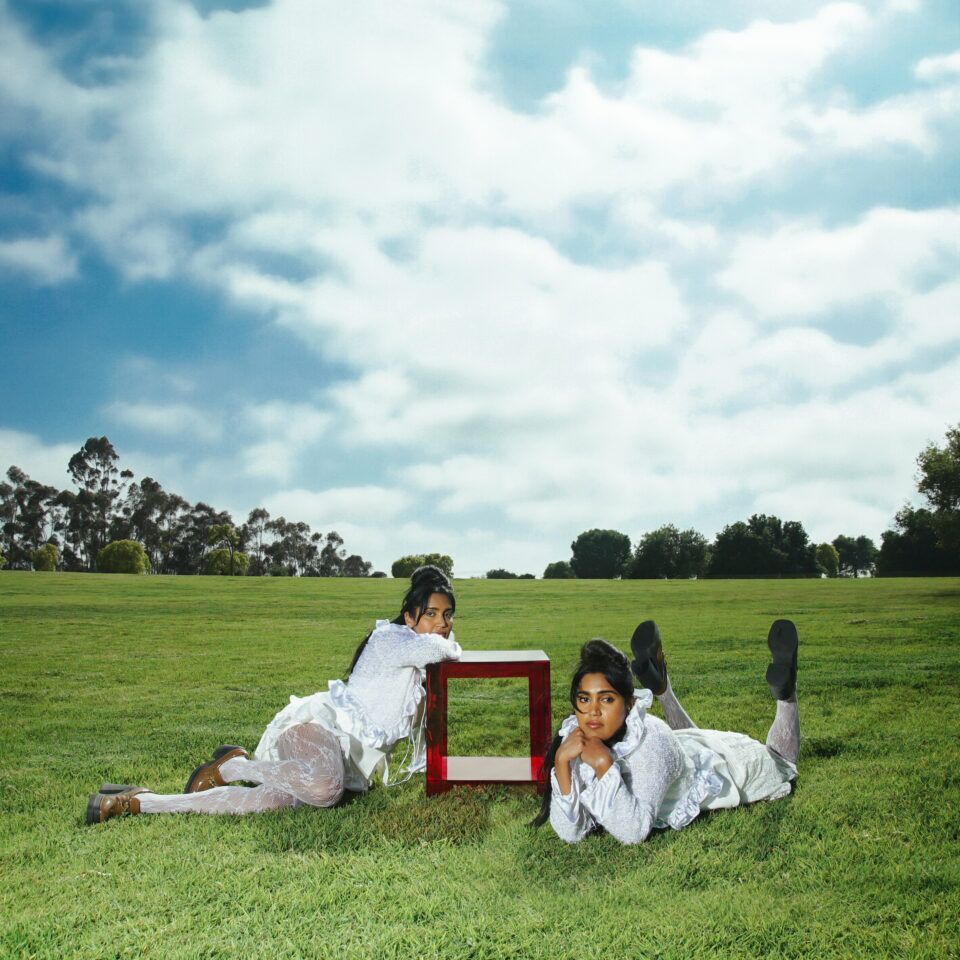
Between Bengaluru, Dallas, Boston and now Los Angeles, singer-songwriter Akshara has often tried to make the best of all worlds, even co-singing “Maathare” composed by A.R. Rahman for Tamil film Bigil in 2019. More recently, she’s been basking in the glory of TikTok fame with the song “ORBIT” and her new EP ‘I’m bored of 4/4’ and working on her debut album.
When did you feel like music could be a legitimate expression of both your Indian roots as well as the more Western sensibilities? Has that been a gradual thing or something that came as soon as you began working on music?
I’ve always grown up learning Indian classical music and have realized, as I’ve been making music for the last 5-6 years, that it’s so ingrained in my vocal expressions that it’s effortless and inevitable for it to find its way into my songwriting. While I’ve considered if it’s something intentional, I honestly think my music is just a reflection of what I’ve grown up with and my tastes. They spill into everything I create, from the little Hindustani runs to the harmonies I’ve picked up from Japanese House or Ariana Grande. And I love the way it all comes together.
What’s one creative practice that you took from India to the U.S. that you feel helped in your journey?
I’d say the discipline that comes with having grown up in the classical world. There’s such an emphasis on kala or artistry over all else, and that’s something I still try to carry with me every day. In the age of social media, artists feel so much pressure to show up in a certain way that the beauty of the process feels lost and the things we enjoy most about music feel the least important: writing songs, singing every day, spending time with other creatives, going to concerts – are all a part of the creation process. “Make the best possible art you can make, and all else simply follows suit.”
How do you look back at the success of “Orbit” and songs like “Eyes” in recent times? What’s been your favorite memory attached to these songs right now?
I look back at them and realize they were some of the most fun songs to make, and the songs I thought least about. Both songs were made with some of my favorite producers and friends, and us just having a good time in the studio. During “Eyes” I was very inspired by Pinkpantheress and so obsessed with UK Garage, and it was so exciting to bring that to “Kannazhaga,” an ethereal, beautiful Tamil song, while adding my own twist to it.
With “Orbit,” I had just moved to L.A. and was discovering my sound, figuring out what it meant to be an artist in a big city and find myself. I loved experimenting with melodies over Ale Araya’s beautiful synths, and it felt like I was in a flow state while creating it, which is the best part.
You lived in Bengaluru, moved to Dallas, studied in Boston, and now live in L.A. What’s been one “peak desi American experience” you can share?
I think it’s so unique having lived half your life in both countries because you feel like you can relate to everyone and no one at the same time. My song “theplaceicomefrom” was written describing this exact experience. Little things like subconsciously taking off my shoes when I step into someone’s house, code-switching effortlessly between both accents and accentuating every outfit with Indian jewelry or drip. It took a while to find a way to blend both worlds without feeling like I was stepping in different shoes each time I switched, but now it all feels so whole and authentic.
You released your EP I’m bored of 4/4 in July. What did you get to do differently on that project?
This project was different because it was the most experimental I’ve gotten. I love playing with rhythms, especially having grown up listening to Carnatic music – taal is such a big part of the process. I loved playing with time literally and figuratively — both songs were in unusual time signatures or rhythms, ⅝ and ⅞ respectively. In “Storyteller,” I talk about being a messenger traveling time and telling the stories of my ancestors. The things they weren’t allowed to speak of reflect in my music. In “Time Travel,” I transport my listeners back to an era before social media invaded our sense of authenticity and self.
What’s a misconception about the U.S. music industry that slowly got busted as you spent more time there?
Hmm, I’d honestly say there’s a misconception about what being a “pop” artist means. What I love about being an artist here is everyone has a place as long as you’re being entirely true to yourself. I’m so inspired by so many different kinds of musicians — Rosalia, Yebba, Clairo, SZA — all women who occupy very unique, different soundscapes and worlds. Music pushes boundaries because people are willing to innovate rather than recreate what already exists. And that’s so special.
What can more Indians/desi diaspora do to get a footing as a full-time artist in the U.S., according to you?
I think studying music is such an important part of the process, and finding your sound. Who are you inspired by? What other art forms outside of music pique your interest? What kind of instruments do you like to listen to? I’ve been reading The Artist’s Way by Julia Cameron, and it’s such an incredible experience. Silencing yourself from the noise of the internet and what everyone else is doing really helps you cement your own sound and taste.
What’s coming up through 2026 in terms of projects that you can talk about?
I’m working on my debut album, which I’m so excited about. Let’s say she’s CLONES’s bigger, more mature sister. It’s very alt-pop and experimental, and I’ve also been producing a lot more of what I’m about to release, which has been such an exciting journey.
——————————————————————————————————————
Cartier K
Mumbai-origin, Los Angeles-based Cartier K aka Vivaan Gugnani is the teenage beatsmith behind the music for songs like Fivio Foreign’s “PlaqueBoyMax” and Lil Tecca’s “On Your Own.” He’s now using his reach to build a community with an initiative called The Producer Social.
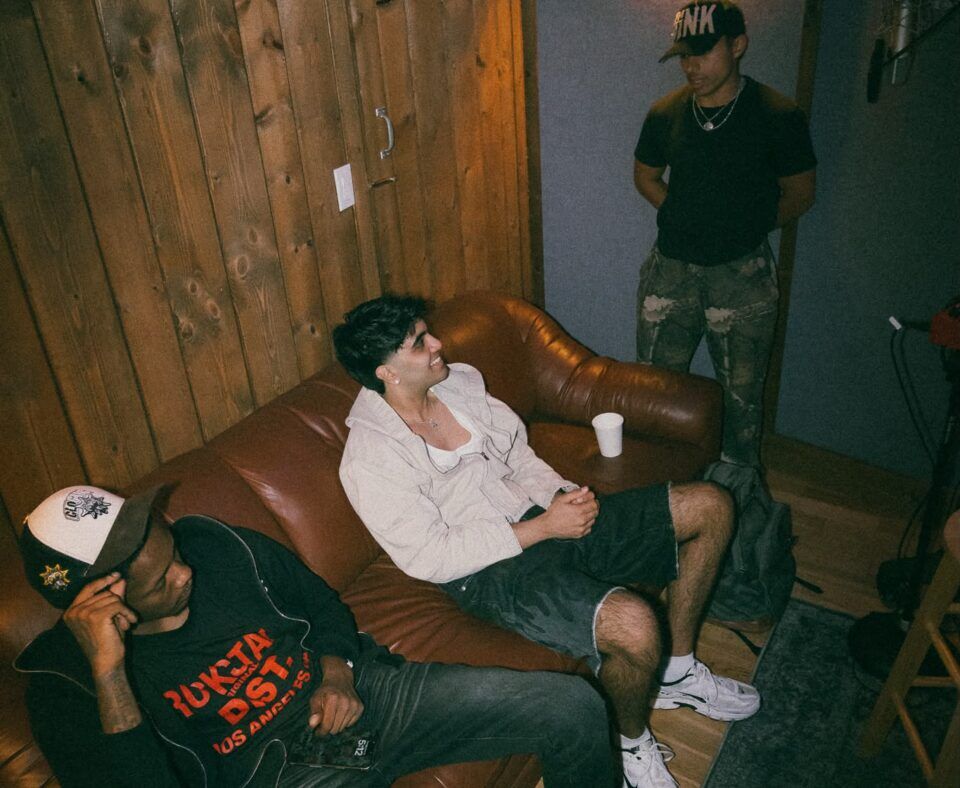
How did you get into music production? Being from Mumbai, did you feel like music could be a legitimate expression of both your Indian roots as well as the more Western sensibilities?
I initially got into music production trying to be a rapper because I was just chronically online throughout the whole pandemic and stumbled across FL Studio. I haven’t looked back since. I’d like to say I grew up online, so I would just listen to music that made me move; being from Mumbai hasn’t really shaped my sound in specific. I was always more inclined to a global and mainstream sound.
You don’t have to sound a certain way because you’re from India. You can just make great music, and I feel like people care about that first. However, nowadays when I’m in studios with bigger producers like CHASETHEMONEY, we’ve only been using old Indian samples and sounds.
What’s one creative practice that you took from India to the U.S. that you feel helped in your journey?
I’d say I like the simplicity and uptempo vibe that Bollywood music brings to the table and it can be heard in my sound today. I like to make music that makes people dance so I take inspiration from the 2010s era of Bollywood music for sure.
How did you end up working on “PlaqueBoyMax” and also “On Your Own”? Do you count those as milestone moments or do you feel like those are yet to come?
The way I ended up producing both those songs was just through mutuals online. I was in India at the time, so that was my only avenue was sending beats through Telegram/YouTube. I think it was definitely cool to have a song with those kinds of artists at the age of 16/17, but I wouldn’t really consider them milestone moments. I just use them more as proof that I can make hits whenever I walk into a room.
What’s been your peak Los Angeles memory so far?
Honestly, it was the realization that I’ve been getting into these rooms and becoming critical parts of them that I didn’t have any access to 6 months ago. All of this purely through hustle and persistence, without any prior connections or knowledge about the industry as a 19-year-old, has been pretty crazy to me. There’s a lot more to come.
What led you to starting The Producer Social?
Making music can be lonely, and I’ve personally struggled with that. The goal with Producer Social is to really build a community out of the love I have for creating and listening to music. Our goal is to own every piece of the music pipeline, from creating the music (through producer and writing camps) to actually giving the artists a platform to perform that music through shows and events
What’s a misconception about the U.S. music industry that slowly got busted as you spent more time there?
It was that being in the U.S. would automatically give me a path to success in the industry. I had never been to the U.S. before, so the culture and the people were entirely new to me and I went in with a lot of expectations. In reality, there’s no single way up in the music industry; it’s really a combination of years of building your network and keeping people on their toes that pays off.
What can more Indians/desi diaspora do to get a footing as a full-time artist in the U.S., according to you?
One thing I feel like is really underrated as an Indian artist in the U.S. is building a community of fellow South Asian listeners who will come out to your shows, support your music, and stand with your message as an artist. I don’t think that’s exploited enough here and is definitely a market that’s untapped.
What’s coming up through 2026 in terms of projects that you can talk about?
In terms of projects coming up in 2026, we plan on hosting another producer camp within the following months with an even bigger roster of guests coming. Also, we’re in the process of throwing a back-to-school music festival at UCLA alongside [hip-hop media platform] No Jumper. In terms of music, I have some stuff with Ty Dolla $ign on the way.
——————————————————————————————————————
Vamsi Kalakuntla
Hyderabad-origin, Dallas-based Vamsi Kalakuntla has become more than just a bankable Telugu DJ for cultural parties. His infectious, dancefloor-friendly pop is now part of show OSTs like ‘Mismatched’ season 3 (“Feelings,” “Heartbreak Disco”), and his latest is a reggaeton-inspired song “Mantra” where Latin America meets Telugu music.
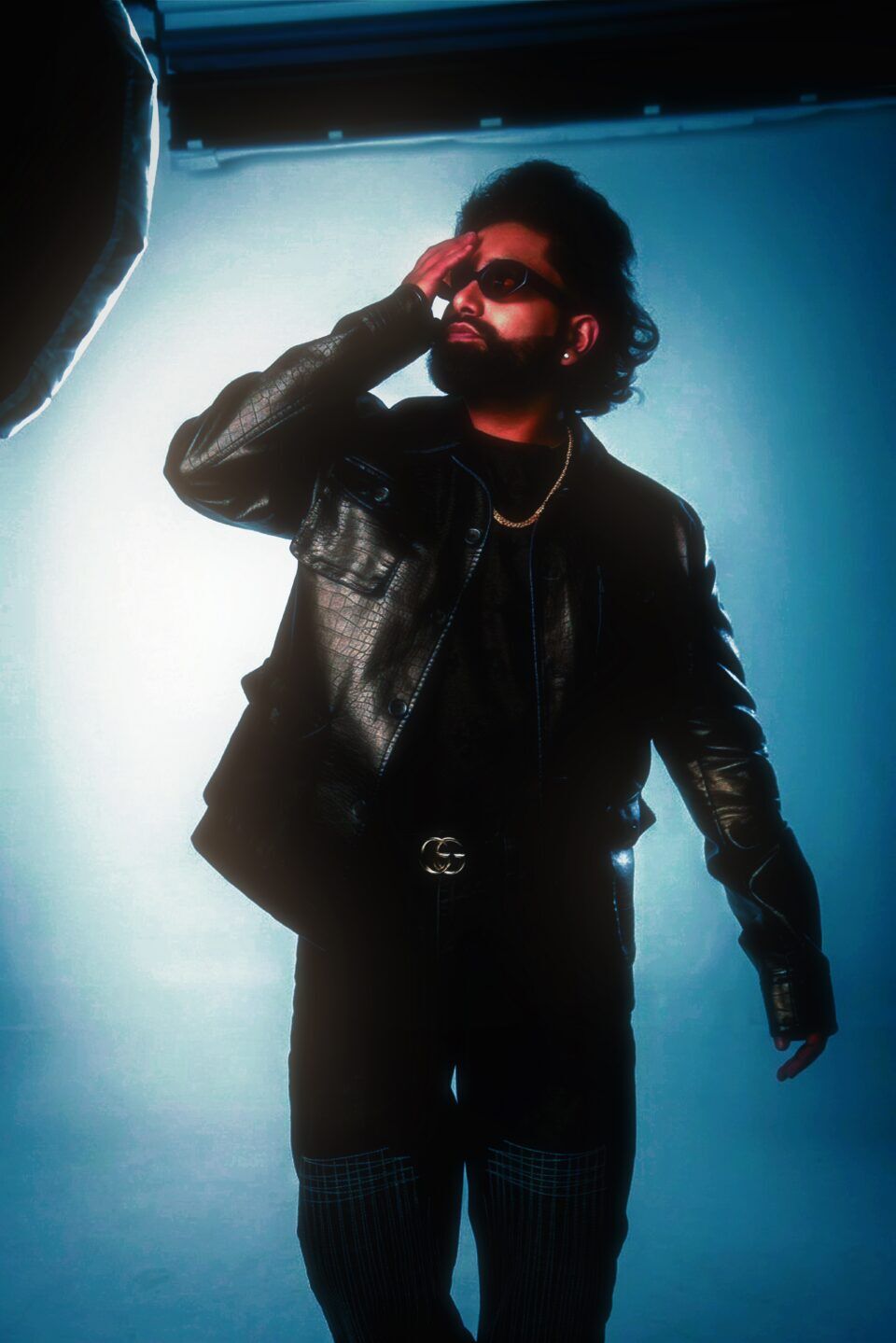
When did you feel like music could be a legitimate expression of both your Indian roots as well as the more Western sensibilities?
It goes back to my radio days in 2015. I’d just moved to the U.S. for my master’s, and I was hosting a radio show on the NPR station on campus. What struck me was how little people here knew about Indian music beyond Ravi Shankar and the legends — and when they did know something recent, it was the stereotype: everything filtered through “Mundian To Bach Ke.” Meanwhile, there was this massive world of our music, with almost no discoverability in America — especially for listeners who don’t understand the language.
As a host, I was consuming and programming so much music, and I kept feeling that American audiences would genuinely appreciate a real fusion of both worlds — I was still sneaking Bollywood and Telugu records into my show here and there [laughs].
When my education ended, the show ended with it — that’s how campus radio works. But the thought wouldn’t leave me alone. If I couldn’t keep programming the bridge, I’d have to build it myself. That’s what pushed me to start making my own music.
What’s one creative practice that you took from India to the U.S. that you feel helped in your journey?
If I have a studio session, I’m up very early, around 4:30 am, and I finish my prayers first. Then I try to write: words, a hook, at least a small structure of the song. At that hour, my brain is hyperactive — I feel like a mutant from Marvel! I know a lot of artists love writing late at night, but I’m a morning person through and through. That’s the practice I took from India.
And there’s one more: if I’m performing — say I’m DJing — I listen to a lot of bhajans before my sets. Nothing related to what I’m about to perform. It just centers me before I walk in.
When someone sees an artist’s discography for the first time, they look at all these big numbers that you’ve accrued. Before that kind of listenership came your way, what was it like finding your audience?
Finding your audience is something I genuinely cherish as an artist — and for me it starts with one text. When I released my first song, “Nightmare,” I got a message from someone completely outside my circle of family and friends. The song had found him on its own. He was going through a breakup, and he told me the record came out at exactly the moment he needed it — it helped him cope with what he was carrying.
That was the moment it clicked for me: it doesn’t matter whether I’m connecting with a thousand people, ten thousand, whatever the number ends up being. If a song can genuinely move a single person through something real, that’s success. Everything since — the streams, the charts — is that same feeling, multiplied. But it started with one text from a stranger, and honestly, that’s still the metric I care about most.
What is your peak Dallas memory from either an encounter you had that sums up living in the city or being a part of the music scene or even just one of your shows?
I did my master’s at East Texas A&M, northeast of Dallas, and that’s where I hosted on the NPR station. As part of my programming, I played a lot of country and bluegrass — and one of the artists I programmed constantly was Brad Davis, a Grammy winner and a legend of the scene up there. To me, he was a name on a chart, someone whose records I queued up on air.
Fast forward a few years: I’m inducted into the Recording Academy through the Texas chapter, I’m performing at the Grammy event in Dallas — and Brad is right there. Same room. Standing next to him as a peer, a voting member myself… that arc — radio kid to Academy member, in the same city — is Dallas for me.
And beyond that, some of my proudest Dallas nights have been the full three-to-four-hour Telugu music shows we’ve done here. People have driven four, five hours from other states just to experience Telugu music like that. I can honestly say we’ve built that culture in Dallas — and it’s become a mixer: Telugu music introducing itself to listeners who’ve never heard the language, and a community growing stronger through it.
You got to be part of the Mismatched soundtrack. What was it like cracking that? How do you weigh out any commercial/film/series projects if they come your way? Would you want to be part of a Telugu film soundtrack?
Mismatched will always have a special place in my heart — that sync took me to the Shazam charts, and it gave the song a permanent home in a lot of my listeners’ hearts. Seeing my music on a Netflix series was a surreal feeling.
I have to thank Akarsh Khurana for that — and before him, a quick shout-out to Sharin from Apple Music India, because she’s the one who introduced my music to the team. They were looking for Telugu artists, specifically someone with experience in the Dakhni dialect of Hyderabad, since that part of the season was set there. It’s a full-circle thing: editorial support turning into a sync.
When a commercial or film project comes my way, I go in with an open mind — my whole focus is consuming what the director is trying to convey to the audience, and tailoring my music around his idea rather than forcing something separate onto it. The song serves the story.
And a Telugu film soundtrack? I’d love to. My independent lane is about proving Telugu music can live outside film — but the two aren’t enemies. Bringing this sound into a Telugu film one day, working with SS Rajamouli garu, Sandeep Reddy Vanga garu, or Nag Ashwin garu — that’s the dream, and I’m manifesting it for sure [laughs].
What’s a misconception about the U.S. music industry that slowly got busted as you spent more time in it?
That you have to already be somebody huge to work with the top-liners, the producers, the heavy hitters. That’s the myth that got busted for me after actually being in rooms with some of the biggest producers and writers here.
What I love about the creative community in the U.S. is that they look at skill and talent first, before the numbers and before what you’ve achieved. If you can write, if you can bring something real to a session, the door opens.
And honestly, I think that’s perceived very differently back home in India — there’s this idea that those rooms are closed until you’ve “made it.” Here, the work is the credential. That changed everything about how I move.
What can more Indians/desi diaspora do to get a footing as a full-time artist in the U.S., according to you?
I’ll answer with the story of how I met my producer. I was at Guitar Center renting speakers and subwoofers for a set, and I saw a guy in the corner messing with a MIDI controller. I walked up and asked if he was a producer. He said yes. I said, “I’m a singer-songwriter, and I want to make something good.” He gave me his studio information, I showed up the next day, and that’s where I recorded my first song in the U.S. A few months later, I released it — and I’ve now done 12-13 records with that same producer, including “Feelings,” which was featured on Mismatched Season 3. His name is Jonathan Camacho.
So my advice is: just do it. The universe presents opportunities around you all the time. Start in your community, in your city — there’s always talent to collaborate with, producers, songwriters. Look them up on Instagram, drop a message, meet them, and if you vibe, start writing. Careers get built from exactly that.
But the most important thing is your intention — why do you want to do this? Is this something you’re okay doing for the next twenty, thirty years, or does it just look cool? If you have an honest answer to that question, then go do everything I just mentioned.
What’s coming up through 2026 in terms of projects that you can talk about?
We dropped “Maantra,” a Telugu reggaeton record. The next one after that is a record with Dr. Chaii — we’re doing a Telugu Afro House record. He recently released music with Nicky Romero and Hugel, and wrote on DJ Snake’s latest album, so that’s a collaboration I’m really excited about.
I don’t know how much I can share yet, but one of the biggest rock anthems out there and one of the biggest hip-hop records are both getting Telugu versions. Both interpolations are officially cleared, all of it done independently. I think that’s what defines “Telugu Indie Global,” and I’m super proud that’s what’s coming next.
——————————————————————————————————————
Neeru
Melbourne-based, Indian-origin artist Neeru aka Neeharika Shyju was raised in Oman and is trained in both, Indian and Western classical music. The result is heard in her upcoming album ‘Moonbow,’ a calming journey inspired by a rainbow that occurs at nighttime.
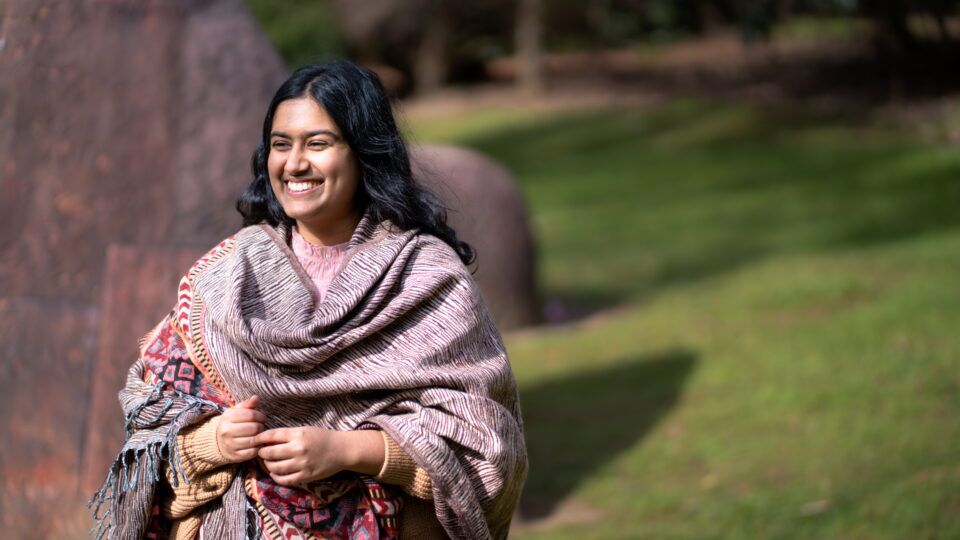
When did you feel like music could be a legitimate expression of both your Indian roots as well as the more Western sensibilities? Was there a particular song, project or time?
Moving to Australia in 2017 allowed me to experience the Western genres to their full extent. The major change happened once I began studying at the Victorian College of the Arts Secondary School in 2020, where I started learning Western art music as my principal study. Alongside this training, I started exploring other styles of music to see how I can bridge the gaps between them, whilst staying true to my own heritage.
What’s one creative practice that you drew from your Indian upbringing that you feel helped in your journey?
Indian classical music is an intricate art form passed down via the oral tradition. This training meant that I was not only exposed to different ragas and talams, but was also encouraged to think within a disciplined framework when it came to improvisatory moments in my performance.
I believe this set a strong aural foundation — which turned out to be crucial for the training I got in high school, and later for the compositions I’ve written and performed alongside peers here and artists in India.
How did the concept for Moonbow come to you? Can you help describe a lunar rainbow to someone who’s never seen it before?
As the name suggests, it’s a rainbow that occurs during nighttime. We would typically see this closer to waterfalls or in very misty areas, where the full moon is able to reflect its light to show these beautiful colours. Being a symbol of hope and resilience, I think the rainbow carries a stronger spiritual meaning when it appears during nighttime, and I thought this would be the perfect central idea to have in this album.
Thematically, it also feels like an album that reflects the darkness that comes with those hours of the night. Does it feel cathartic to see this music now come out?
This is the biggest piece of work that I have done so far, and whilst it took a lot of time and effort, it was incredibly rewarding to create. A lot of these themes I do connect with on a deeper level, and reflecting on these experiences makes the light much more precious for me to witness. With all of this in mind, it is exhilarating to see it come out for the audience to experience with me.
From your time being an Indian-origin artist in Melbourne, can you recall any experiences that felt like a “peak Australia” moment, as an artist or just as a person living in Melbourne and now Sydney?
It would have to be when I wrote my Acknowledgement of Country piece, “Respect the Land.” Australia prides itself on being a multicultural country, but it’s also home to the First Nations community, one of the oldest civilizations in the world.
Learning more about the deep connection between the community and Australian soil as I was writing the piece made me feel proud to be a part of this wonderful country. To be able to have my work evaluated by established Australian composers, and be performed by both Queensland Youth Orchestra and the Melbourne Youth Orchestra was a priceless part of my journey thus far.
What drew you to being inspired by Celtic music? And ambient music as well?
My father is a big lover of Celtic music. Growing up, I remember him listening to artists such as Loreena McKennitt and The Corrs, who fused those wonderful traditions with modern genres such as rock and pop. I was always drawn to how hauntingly beautiful these songs could be. My fascination with ambient music came once I joined high school. Particularly Impressionistic music, it seemed like painting a picture with all these colors by using sound as a medium. These are just some of the many styles of music that have inspired me throughout my life.
What’s a misconception about the Australian music industry that slowly got busted as you spent more time being part of it?
I’m still early in my journey, so my view is limited. But as I spend more time in this field, I do get pleasantly surprised by how open and inclusive the industry is. There’s real space for different voices and traditions to sit alongside each other, and that feels rare.
What can more Indians/desi diaspora do to get a footing as a full-time artist in the Australian music industry, according to you?
I think collaboration is key when it comes to understanding how the industry works – both within and outside of the desi community. The more people you work with, the more diverse perspectives you will get, which helps you create something completely unexpected. That being said, I myself am still in the “trust the process” phase at the moment, so I’m just letting things fall into place naturally.
What’s coming up through 2026 in terms of promoting Moonbow? Are there any music videos or concert tours in the works?
For this album, I’m primarily aiming for a release across all major streaming platforms. Live performance is very much on my mind for what comes next, and I’m open to opportunities as they arise.
Copyright © 2026 Jwala Varadhi – Telugu Breaking News, AP, Telangana, Politics & Latest Updates. All rights reserved.
 প্রিন্ট করুন
 সেভ করুন