
NASA calls off risky mission to save falling satellite
Article content
NASA’s risky mission to save a falling space telescope has failed, bringing an end to an experimental project aimed at demonstrating a new way to extend the lifespan of spacecraft in orbit.

THIS CONTENT IS RESERVED FOR SUBSCRIBERS
Enjoy the latest local, national and international news.
- Exclusive articles by Conrad Black, Barbara Kay and others. Plus, special edition NP Platformed and First Reading newsletters and virtual events.
- Unlimited online access to National Post.
- National Post ePaper, an electronic replica of the print edition to view on any device, share and comment on.
- Daily puzzles including the New York Times Crossword.
- Support local journalism.
SUBSCRIBE FOR MORE ARTICLES
Enjoy the latest local, national and international news.
- Exclusive articles by Conrad Black, Barbara Kay and others. Plus, special edition NP Platformed and First Reading newsletters and virtual events.
- Unlimited online access to National Post.
- National Post ePaper, an electronic replica of the print edition to view on any device, share and comment on.
- Daily puzzles including the New York Times Crossword.
- Support local journalism.
REGISTER / SIGN IN TO UNLOCK MORE ARTICLES
Create an account or sign in to continue with your reading experience.
- Access articles from across Canada with one account.
- Share your thoughts and join the conversation in the comments.
- Enjoy additional articles per month.
- Get email updates from your favourite authors.
THIS ARTICLE IS FREE TO READ REGISTER TO UNLOCK.
Create an account or sign in to continue with your reading experience.
- Access articles from across Canada with one account
- Share your thoughts and join the conversation in the comments
- Enjoy additional articles per month
- Get email updates from your favourite authors
Sign In or Create an Account
or
Article content
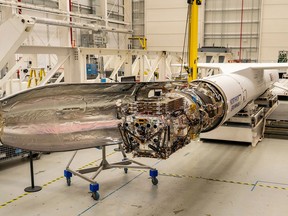
Katalyst Space’s Link spacecraft, partly funded by the U.S. space agency, launched in early July with the goal of capturing NASA’s Neil Gehrels Swift Observatory and boosting its orbit.
Article content
Article content
Article content
Swift, which has been studying gamma-ray bursts from space since 2004, has been slowly falling out of orbit and will eventually burn up in Earth’s atmosphere. Link’s mission aimed to push Swift to a higher altitude to keep the spacecraft operating in space for years into the future.
Article content
By signing up you consent to receive the above newsletter from Postmedia Network Inc.
Article content
However, Link suffered control issues after launching, causing the spacecraft to spin and leading to a loss of communications with the vehicle, the company and NASA said. Katalyst found issues with the hardware used to manage Link’s orientation, as well as problems with the vehicle’s thruster engines, they said.
Article content
NASA always presented the Swift Boost mission as a risky endeavour, given its quick turnaround time. The U.S. space agency awarded Katalyst a US$30-million contract for the mission last September after a series of solar storms caused Swift to drift toward Earth faster than expected, according to NASA.
Article content
“We took on this high-risk, high-reward challenge and are proud of the milestones we reached along the way,” Katalyst Chief Executive Officer Ghonlee Lee wrote in a statement.
Article content
Article content
The company and NASA are assessing what other objectives the Link spacecraft can meet while in orbit, with the possibility that Link may still approach the Swift telescope to demonstrate the ability to hover close to another vehicle in space.
Article content
Article content
The 21-year-old Swift observatory studies gamma-ray bursts, which NASA has said are the most powerful explosions in the universe, and the satellite was originally expected to have an orbital life of seven years.
Article content
Without a boost to its orbit, Swift will likely enter Earth’s atmosphere and burn up later this year, NASA said, bringing an end to its mission.
Article content
Copyright © 2026 Jwala Varadhi – Telugu Breaking News, AP, Telangana, Politics & Latest Updates. All rights reserved.
 প্রিন্ট করুন
 সেভ করুন