
Ceuta’s chaotic migrant surge explained: What triggered border crisis?
_updates.jpg)
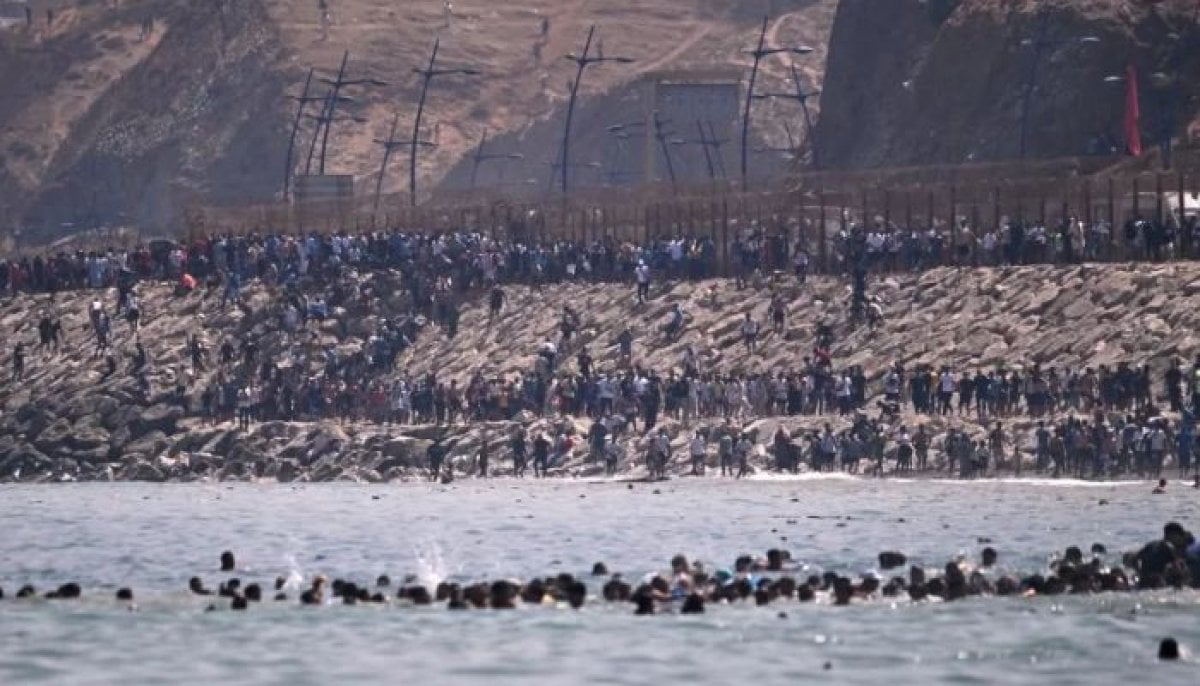
Ceuta, Spain’s city located on the northern coast of Africa, is witnessing chaotic scenarios, involving a massive and sudden influx of thousands of migrants swimming or scaling barriers from neighbouring Morocco.
What really happened?
On Thursday, thousands of migrants, ranging between 2,000 and 3,000, breached the border. Many migrants also swam around breakwaters by using inflatable devices and some scaled the high border fence separating Morocco from the Spanish enclave. As per authorities, around 1500 also arrived last week.
In this hullabaloo, at least 15 people died during the chaos while attempting the dangerous sea crossing. When the security situation got out of control and ultimately collapsed, Ceuta President Juan Jesús Vivas declared a humanitarian emergency and sought army aid.
In a statement, he said, “We are facing a situation of absolute humanitarian and social emergency,” adding that facilities for unaccompanied minors were operating at 2,400 percent of capacity.
Spain’s deployment of troops
In the wake of the worsening situation in Ceuta, Vivas asked Spain to declare a national emergency and deploy the police and army in the area. However, Spain’s Interior Ministry refused to impose a national emergency over mitigation concerns as reported by Associated Press.
Later, the ministry announced that it will send 60 troops to reinforce the border security in the North African enclave.
"The armed forces will reinforce the Civil Guard in the exercise of its powers and any others that may be necessary to maintain security in the city of Ceuta," the ministry said.
Rachid Sbihi, head of the association that represents Spain's Civil Guard officers who police the border in Ceuta, explained the situation, “The situation is absolute chaos. It's not possible to give precise numbers, but there are thousands of migrants crossing,” adding that the border had “totally collapsed.”
_updates.jpg)
Underlying reasons of surge
The exact reason behind Thursday’s chaotic surge is still unclear. However, opposition party politicians in Spain and Europe blamed Sánchez’s pro-immigration stances for the migration surge. His government last year implemented a policy earlier this year aimed at goving about half a million undocumented immigrants legal status in Spain.
Local authorities previously linked rising crossings to a Spanish Supreme Court ruling regarding due process for sea arrivals.
The dramatic scenes also drew comparisons to the major May 2021 border crisis when around 8,000 migrants crossed into Ceuta in just 2 days in the midst of diplomatic rift between Spain and Morocco.
International and political ripples
The chaotic surge drew various responses from international community. For instance, Italian PM Giorgia Meloni threatened to suspend Italy's open-border Schengen agreement with Spain.
She wrote on X, “I have spoken with Interior Minister Matteo Piantedosi. Italy will not stand by and watch. We are convening the relevant bodies, and following these meetings, we are prepared to intervene with extraordinary measures to defend the borders and the safety of citizens, including the suspension of the Schengen Area with Spain.”
“On illegal immigration, we will not yield an inch: defending the borders, stopping human traffickers, and ensuring effective repatriations will continue to be the line of this Government.”
Local leaders in Ceuta also warned that migrant reception centers are also overwhelmed.
Status of Ceuta
Ceuta is a small Spanish city located on North Africa’s coats. It has borders both with Morocco and Mediterranean sea. Since the 16th century, it has belonged to Spain.
Copyright © 2026 Jwala Varadhi – Telugu Breaking News, AP, Telangana, Politics & Latest Updates. All rights reserved.
 প্রিন্ট করুন
 সেভ করুন